
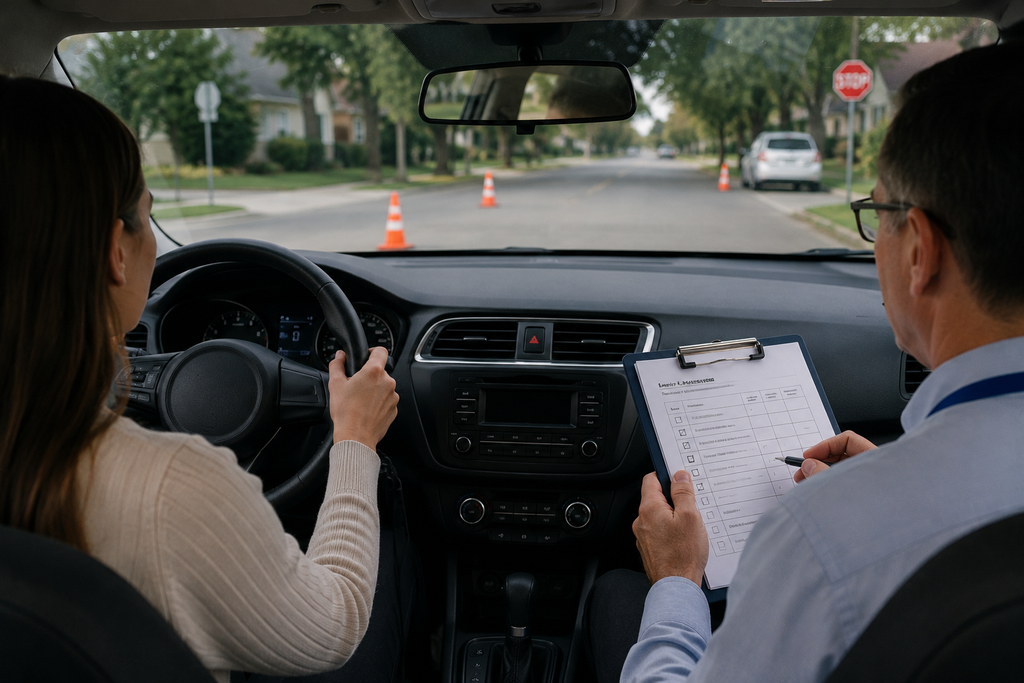
For most new drivers, the road test is the single most nerve-wracking part of the licensing process. Unlike everyday practice, a road test is evaluated by a stranger who is watching for very specific behaviours, many of which a learner may not even realise are being assessed. Understanding exactly what examiners look for can make the difference between feeling anxious and uncertain, and walking into the test with a clear sense of what to expect.
This guide breaks down what Ontario road test examiners actually evaluate, from basic vehicle control to more advanced observation and decision-making skills, so learners can prepare with confidence rather than guesswork.
Understanding the Ontario Road Test Structure
Ontario’s graduated licensing system includes two road tests. The first, often called the G2 test or Level One test, evaluates fundamental driving skills in mixed traffic conditions. The second, the Level Two or full G test, is more advanced and typically includes expressway or highway driving, since a fully licensed driver is expected to handle nearly any legal driving situation independently.
While the two tests differ in complexity, examiners at both stages are assessing the same core categories: vehicle control, observation habits, decision-making and adherence to traffic laws. Understanding these categories in detail helps learners know exactly where to focus their preparation.
Vehicle Control Basics
Before an examiner evaluates more complex decision-making, they are watching for basic, consistent control of the vehicle.
Smooth Starting and Stopping
Examiners look for controlled acceleration and braking, rather than sudden jerks or abrupt stops. Smoothness signals that a driver has good control and is anticipating traffic conditions rather than reacting at the last moment.
Steering Control
Steady, purposeful steering is important. Examiners note whether a driver oversteers, understeers or makes frequent small corrections, since this can indicate a lack of confidence or improper hand positioning.
Speed Control
Maintaining an appropriate speed for posted limits, road conditions and traffic flow is closely observed. This includes slowing appropriately before turns, adjusting for weather and never exceeding a safe speed for the situation, even if it is technically within the legal limit.
Observation and Awareness Skills
Beyond basic control, examiners place significant weight on how well a driver observes their surroundings.
Mirror Checks
Examiners watch for regular, purposeful mirror checks, not just occasional glances. A driver should be checking mirrors frequently throughout the test, not only when changing lanes.
Shoulder Checks
Shoulder checks before lane changes, merges and turns are one of the most commonly assessed habits. Skipping a shoulder check, even if the mirror appeared clear, is a common reason learners lose points, since mirrors alone do not eliminate blind spots.
Scanning Intersections
At intersections, examiners are watching whether a driver scans in all directions before proceeding, rather than focusing only on the vehicle directly ahead. This includes checking for pedestrians, cyclists and vehicles that may be approaching from a less obvious angle.
Following Traffic Laws
Adherence to traffic rules is one of the most straightforward categories, but it is also one where small oversights can add up quickly.
Traffic Signs and Signals
Examiners assess whether a driver correctly identifies and responds to stop signs, yield signs, traffic lights and posted speed limits without hesitation or confusion.
Right-of-Way Rules
Understanding who has the right of way at intersections, particularly uncontrolled or four-way stops, is a frequent area of evaluation. Hesitation or incorrect right-of-way decisions are common mistakes examiners note carefully.
Lane Discipline
Staying within lane markings, using turn signals correctly and choosing the appropriate lane for turns or lane changes are all part of this category.
Decision-Making in Real Traffic
Beyond mechanical skills, examiners are evaluating how a driver thinks and reacts in real-world situations.
Anticipating Hazards
Rather than only reacting to hazards as they appear, examiners want to see evidence that a driver is anticipating potential risks, such as a pedestrian near a crosswalk or a vehicle that may pull out unexpectedly.
Merging and Lane Changes
Smooth, well-timed merges and lane changes, combined with proper shoulder checks and signalling, demonstrate both awareness and confidence. Hesitating too long or merging too abruptly are both commonly noted issues.
Parking and Reversing
Depending on the test, examiners may assess parallel parking, three-point turns or reversing in a straight line, evaluating spatial awareness, mirror use and control during low-speed manoeuvres.
Common Reasons Learners Lose Points
While every test is different, certain issues come up repeatedly across road tests in Ontario.
Rolling through stop signs instead of coming to a complete stop Failing to shoulder check before lane changes or turns Following too closely behind another vehicle Hesitating excessively at intersections Improper speed for road or weather conditions Poor lane positioning during turns Forgetting to signal, or signalling too late
Many of these mistakes are not about a lack of knowledge, but about habits that have not yet become fully automatic. This is one of the reasons structured practice, rather than occasional driving, tends to produce stronger results on test day.
How to Prepare Effectively
Because examiners are assessing specific, repeatable behaviours, focused preparation tends to be far more effective than general practice alone.
Practise the Specific Skills Being Assessed
Rather than simply accumulating driving hours, focus practice sessions on the exact categories examiners evaluate, mirror checks, shoulder checks, smooth control, intersection scanning and lane discipline.
Get Feedback From an Experienced Source
Because many habits are difficult to notice on your own, feedback from an instructor or experienced driver can help identify small issues before they show up during the actual test.
Practise on Test-Similar Routes
Where possible, practising on roads similar to those used during testing, including a mix of residential streets, intersections and, for the Level Two test, expressway driving, can help reduce uncertainty on test day.
Why Professional Preparation Can Help
While independent practice is valuable, many learners benefit from working with a driving school before their road test. A qualified instructor can identify specific habits, such as inconsistent shoulder checks or hesitation at intersections, and correct them well before test day, rather than learners discovering these issues during the actual evaluation.
For learners in the Ottawa area, a driving school in Ottawa can be particularly useful, since instructors are often familiar with local test routes, common intersections used during testing and the specific conditions examiners in that region tend to focus on.
For learners preparing specifically for their road test, programs are designed around exactly this goal, targeting the skills examiners assess most closely, so learners walk into their test with a clear understanding of what to expect rather than uncertainty.
Final Takeaway
Ontario road test examiners are not looking for perfect driving. They are looking for consistent, safe habits, smooth vehicle control, thorough observation, sound decision-making and reliable adherence to traffic laws. Understanding exactly what is being assessed allows learners to prepare with purpose, rather than simply hoping for the best.
By focusing practice on the specific categories examiners evaluate and, where helpful, working with structured instruction beforehand, new drivers can approach their road test with far more confidence and a stronger chance of success.
Frequently Asked Questions
What is the most common reason learners fail a road test?
Missed shoulder checks, rolling stops at stop signs and following too closely are among the most frequently cited reasons learners lose points or fail a road test.
Do examiners expect perfect driving?
No. Examiners are primarily looking for consistent, safe habits and sound decision-making, not flawless performance in every situation.
What is the difference between the G2 and full G road tests?
The G2 test focuses on fundamental skills in mixed traffic, while the full G test is more advanced and typically includes expressway or highway driving.
How important are shoulder checks during the test?
Very important. Shoulder checks are one of the most commonly assessed habits, since mirrors alone do not eliminate blind spots.
Can professional lessons improve my chances of passing?
Yes. A qualified instructor can identify and correct specific habits examiners assess closely, which can meaningfully improve performance on test day.
Should I practise on the actual test route before my exam?
Where possible, practising on similar roads and traffic conditions to the test route can help reduce uncertainty and build familiarity before the actual test.


